 trending












In the vibrant world of cryptocurrencies, Non-Fungible Tokens (NFTs) had emerged as the stars of recent years.
 But…
But…
The hype around Non-Fungible Tokens peaked in the 2021/22 bull run that saw nearly $2.8 billion in monthly trading volume recorded in August 2021. From this, NFTs captured the collective imagination worldwide with multiple news reports of million-dollar deals for sales of certain NFT assets.
People were excited about this new type of online asset and something of a goldrush appeared to start. Fast forward to today… and the Non-Fungible Token market is starkly different.
Data from the Block reveals a weekly traded value of around $80 million in July 2023, just 3% of its peak back in August 2021.
So what happened?
NFTs had a bull run then crashed. Hard. We now find ourselves in the midst of a bear market for NFTs, with numerous projects now struggling to find buyers following a pessimistic market outlook on their future value.
The current state of the overall NFT market
As previously mentioned, things have slowed down dramatically within the NFT market as the hype has come to a crashing halt. We know this. We hear about it often. But just how bad is the problem?
The team at dappGambl decided to investigate the problem and we’re here to outline it all for you below.
Using data provided by NFT Scan, we have compiled a comprehensive analysis of over 73,257 NFT collections in order to identify key trends, assess the health of the market, determine the factors contributing to successful projects, and hopefully gain insights into the potential future trajectory of the NFT ecosystem.
The results were shocking, to say the least. The Vast Majority of NFTs are Worthless
Of the 73,257 NFT collections we identified, an eye-watering 69,795 of them have a market cap of 0 Ether (ETH).
This statistic effectively means that 95% of people holding NFT collections are currently holding onto worthless investments.
Having looked into those figures, we would estimate that 95% to include over 23 million people who’s investments are now worthless.
This highlights the incredibly high-risk nature of the NFT market and underscores the need for careful due diligence before making any purchases, especially ones of high-value.
This daunting reality should serve as a sobering check on the euphoria that has often surrounded the NFT space. Amid stories of digital art pieces selling for millions and overnight success stories, it is easy to overlook the fact that the market is fraught with pitfalls and potential losses.
Not enough demand
Of the collections identified, only 21% were fully spoken-for, in terms of having 100%+ ownership. This means that 79% of all NFT collections – otherwise known as almost 4 out of every 5 – have remained unsold.
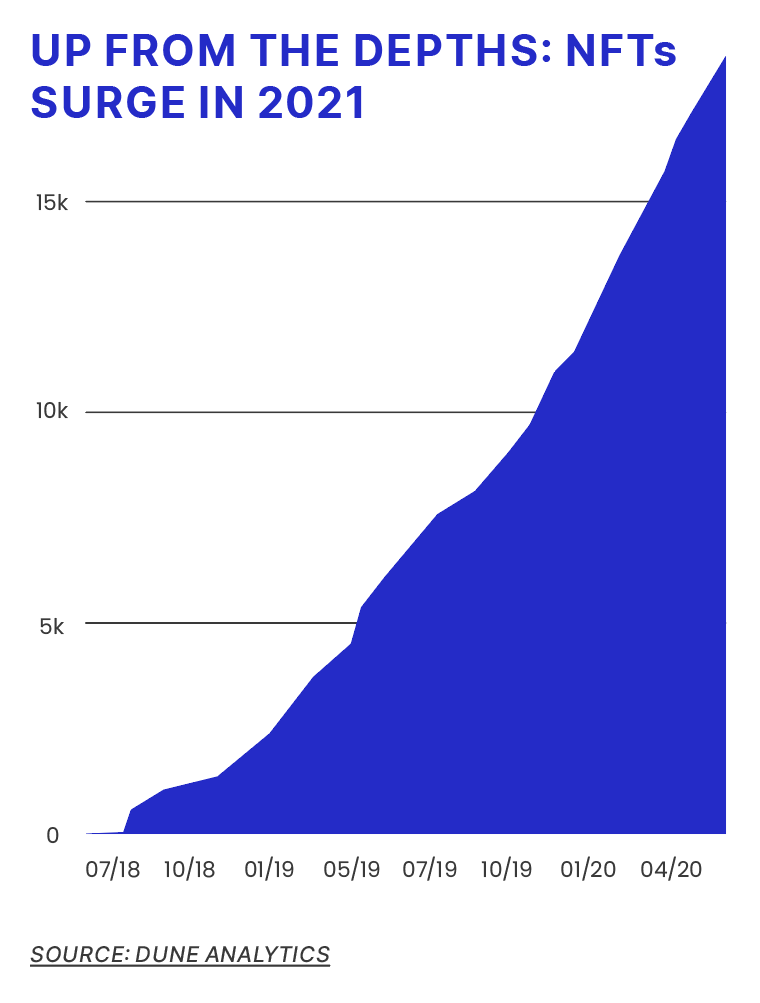 This situation is telling of a significant imbalance between the creation of new Non Fungible Tokens (NFTs) and the actual demand for these digital assets in the current market landscape.
This surplus of supply over demand is creating a buyer’s market where potential investors are becoming more discerning, carefully evaluating the style, uniqueness, and potential value of NFTs before making a purchase.
As a result, projects that lack clear use cases, compelling narratives, or genuine artistic value are finding it increasingly difficult to attract attention and sales.
While the situation does look bleak, many armchair commentators have referred to this crash as “the death of the NFT” – however, NFTs still have a place in our future.
While collectibles like Bored Ape Yacht Club (BAYC) and their subsequent Mutant Ape Yacht Club NFT collections have gained immense popularity, they may lose relevance if they only serve as a profile picture or a ‘flex’ to the have-nots on how much you’re willing to spend on one.
To weather market downturns and have lasting value, NFTs need to either be historically relevant (akin to first-edition Pokémon cards), true art, or provide genuine utility.
Though how you define art as having ‘substance’ is debatable, it stands to reason that plenty believe a large crop of NFTs on the market has none, otherwise there would be demand there to meet it.




Comments