 trending











For decades, the POS terminal was a steadfast but unremarkable fixture of retail life — the small, grey box whose sole purpose was to approve or decline a card transaction. Its role was functional, its design purely utilitarian, and its intelligence minimal.
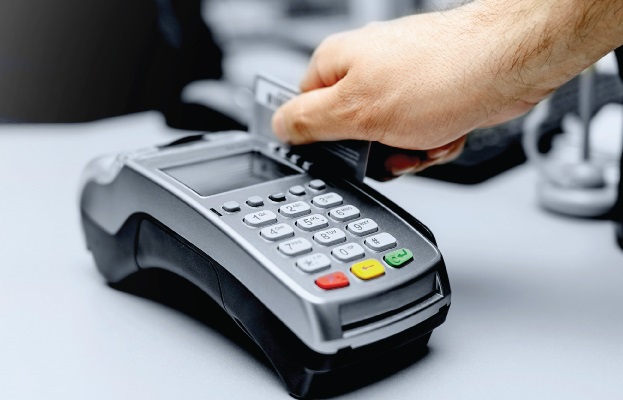
The evolution of POS
The modern POS (point-of-sale) is shifting from a peripheral device into a central nervous system for merchants, connecting payments, loyalty, data analytics, inventory and customer experience in real time.
As one global retail technology executive puts it, “The POS is no longer where the transaction ends. Increasingly, it is where the customer relationship begins.”
That shift is reshaping how merchants operate, how customers interact with brands and how financial services are embedded into commerce.
From hardware to software — and increasingly, to operating systems
The earliest POS terminals were governed by strict hardware limitations and operated as part of closed, proprietary networks.
Their job was simple: read the card, request the authorisation, print the receipt. But the rise of cloud computing, smartphones, and open APIs has upended that architecture.
Today’s POS environment is increasingly software-defined. Smart terminals run on Android or iOS-based platforms. Mobile devices can act as full-service POS units.
SoftPOS — where merchants use their own smartphone as a contactless acceptance device — is accelerating across Europe, the Middle East and Asia.
Diagrams used in industry briefings frequently illustrate this shift as a curve: legacy terminals fading in dominance as multifunctional, cloud-connected devices take precedence.
The implications are profound. Instead of being a sealed box, the POS becomes a flexible, updatable endpoint within a broader digital commerce ecosystem.
Merchants can integrate loyalty, CRM, inventory management, employee scheduling and even lending products through app-like modules.
As Karen Blake, Chief Product Officer at a leading European merchant acquirer, notes: “The POS used to be the last thing a retailer thought about. Now it’s the first thing they upgrade.”
POS as customer engagement hub
The next evolution — and arguably the most transformative — is the shift from POS as a payment instrument to POS as a customer touchpoint.
Retailers increasingly see the checkout moment as a point of interaction, not just completion. Loyalty programmes can be triggered automatically. Offers can be personalised based on past behaviour. Digital receipts can include tailored recommendations.
The POS becomes a conversational interface rather than a silent one.
In some sectors, such as hospitality and quick-service restaurants, the POS now orchestrates the entire customer journey: ordering, preparation, fulfilment, payment, loyalty and feedback.
Staff no longer hover behind a counter; they wander with tablets, taking orders and processing payments on the move. In fashion retail, associates can access stock levels, customer history and loyalty status in real time.
A chart commonly highlighted by industry analysts shows a rising correlation between POS-enabled loyalty enrolment and customer lifetime value — a trend particularly visible in the grocery and pharmacy sectors.
By embedding loyalty prompts at checkout, merchants remove friction that previously required customers to register separately or carry physical cards.
The SoftPOS revolution: acceptance everywhere
SoftPOS — the ability to accept contactless payments on any NFC-enabled smartphone — is arguably the most democratising development in merchant acceptance since the introduction of mPOS dongles a decade ago.
It opens the door to acceptance for micro-merchants, gig-economy workers and mobile service providers who previously could not justify dedicated hardware.
A hairdresser, market vendor or mobile mechanic can accept a tap payment instantly, link it to a loyalty programme, send a digital receipt and analyse sales trends — all from a phone.
This shift is visible in diagrams charting the projected growth of global SoftPOS adoption, which show steep curves through the late 2020s as telcos, banks and fintechs launch SoftPOS offerings in emerging and developed markets alike.
SoftPOS also expands the definition of “point-of-sale” itself. If every worker in a store has a mobile POS, then checkout becomes decentralised. The traditional queue dissolves into a fluid, staff-led experience.
This creates efficiencies, but more importantly, it reduces customer abandonment. “If you eliminate the queue, you eliminate half your lost revenue,” says Liu Zhang, Asia-Pacific Head of Retail Innovation at a global payments processor.
Unified commerce: the backbone behind the terminal
Much of the POS evolution is tied to a broader strategic shift: the rise of unified commerce. Instead of treating online and offline channels as separate infrastructures, retailers are linking them through a single platform covering payments, logistics, fulfilment, stock, returns and customer identity.
The POS is the anchor of this transformation. It becomes a node within the unified commerce network, exchanging data with e-commerce engines, apps, loyalty platforms and warehouse systems.
When a customer shops online and collects in-store, the POS recognises them and updates loyalty and inventory instantly. If a shopper sees a product in store but buys it later online, the retailer still maintains visibility of the full journey.
A common industry diagram illustrates this with a hub-and-spoke model: the POS sits at the centre, with spokes to payments, CRM, digital channels, inventory and analytics.
As retail strategist Martina Köhler notes, “Unified commerce is turning POS from a transactional endpoint into a strategic intelligence asset.”
Data analytics: turning transactions into insight
The POS has always captured data — but historically, this data was shallow and fragmented. Now, with cloud connectivity and integrated analytics tools, the POS is becoming a powerful insight engine.
Merchants can analyse sales by hour, product, employee, weather pattern, inventory level and customer cohort. They can run A/B tests on layouts, promotions or pricing. They can detect anomalies and prevent fraud in real time.
For payment companies, the aggregated behavioural signals coming from the POS unlock new product lines — dynamic merchant pricing, capital lending, cash-flow forecasting and loyalty optimisation.
One global acquirer executive describes POS analytics as “the holy grail of merchant insight — the cleanest dataset you can find, because it’s tied to actual spend, not intention.”
Charts shown in analyst presentations often map the growing share of merchant decision-making driven by POS-derived insights. In sectors such as hospitality, these analytics are beginning to inform everything from staffing schedules to menu design.
Security and compliance: the invisible architecture
The more intelligent the POS becomes, the more sensitive the data it handles. End-to-end encryption, tokenisation and cloud-based key management are now foundational elements of modern POS architecture.
Regulatory expectations are also rising. PSD2, strong customer authentication, PCI DSS 4.0, and global data-protection laws require increasingly sophisticated security controls. The POS is becoming both a compliance checkpoint and a risk-control mechanism.
This is driving investment in device-management platforms and remote diagnostics, allowing acquirers and fintechs to push updates, patch vulnerabilities and monitor terminal health without on-site intervention.
As one cybersecurity specialist notes, “The modern POS is more like a secure computer than a card reader.”
Embedded finance at the POS
A significant emerging trend is the blending of POS and financial services — from instant merchant cash advances to buy-now-pay-later (BNPL) and pay-by-bank.
Merchants can now receive dynamic lending offers at the POS based on real-time sales performance. BNPL options can be offered at checkout without requiring customers to download separate apps. Bank-based payment methods such as open banking transfers are being integrated directly into POS interfaces, allowing merchants to bypass card-scheme fees.
This integration is visible in industry charts showing the rising share of alternative payment rails in in-store environments — once the preserve of online channels.
The future: POS as a distributed, intelligent network
The next phase of evolution will redefine what “point-of-sale” means altogether.
- Contextual commerce: POS systems will anticipate customer needs based on historical behaviour, time of day and location.
• AI-powered recommendations: Checkout screens will adapt dynamically to maximise conversion or engagement.
• Voice-enabled and contactless checkout: Particularly in hospitality and travel environments.
• IoT-enabled smart shelves and kiosks: Turning the entire store into a distributed POS network.
• Wallet and identity integration: POS will authenticate customers not by card, but by digital identity, QR code or biometric verification.
In diagrams presented at recent industry conferences, analysts depict the “future POS” as a constellation rather than a terminal: multiple touchpoints — devices, apps, kiosks, sensors — unified by a cloud intelligence layer.
POS as strategic infrastructure
The transformation of point-of-sale systems reflects a deeper truth: payments are no longer a discrete stage of the retail journey. They are embedded within it. The POS is now the anchor of customer engagement, the channel for loyalty and personalisation, the bridge between online and offline commerce, and the gateway to merchant and consumer financial services.
In this new landscape, the most successful merchants will not treat the POS as equipment, but as infrastructure — a foundation for insight, connection and continuous innovation.
Or, as one payments veteran observes, “We started by trying to modernise the terminal. What we ended up with was a re-imagining of the entire retail experience.”






Comments