 trending











For many households, paying a utility bill or settling a credit card balance used to be a once-a-month ritual carried out with cheques or phone calls to a call centre.
Today, that world looks increasingly antiquated and what consumers seek are instant bill payments.
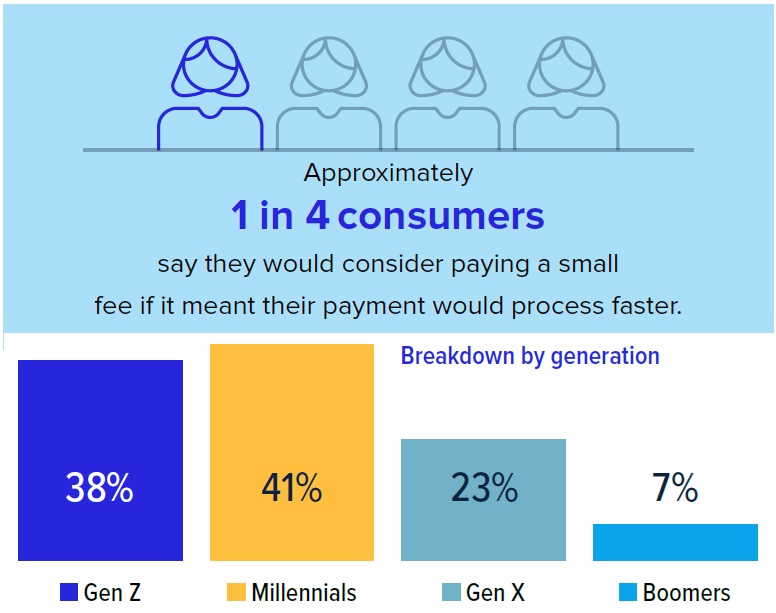 According to ACI Worldwide’s 2025 Speedpay Pulse Report, urgency is becoming the norm: one-third of consumers now make urgent or instsant bill payments, with younger generations leading the charge.
This shift is symptomatic of a broader cultural change. Gen Z and Millennials, raised in an on-demand economy, are less tolerant of friction.
They expect their bill payments to mirror the convenience of hailing a car on Uber or streaming a film on Netflix: fast, seamless, and mobile-first.
Indeed, the study finds that more than a quarter of consumers would consider paying a premium for instant bill payments — and four in five of these are under 40.
For billers, the message is clear: speed is no longer a luxury, but a baseline requirement.
Digital First, Mobile Wallets Mainstream
The dominance of digital channels for instant bill payments is now unequivocal.
Biller websites, mobile apps, and banks’ online portals top the rankings as the preferred ways to settle accounts. Mail-based payments, once a staple of older cohorts, continue to decline.
Even among Baby Boomers, digital options now outweigh the post. Meanwhile, mobile wallets — once dismissed as “alternative” — have crossed decisively into the mainstream.
Half of smartphone owners now use them for payments, spanning every generation.
This mainstreaming has profound implications.
ACI’s research suggests that consumers increasingly compare their bill-paying experiences not just with rival utilities or insurers, but with the slickest digital brands they encounter daily.
For billers, the competition for loyalty is no longer the provider across town, but Amazon, Spotify, and Apple.
That means customer experience must extend beyond simple functionality to encompass speed, rewards, and lifestyle alignment.
ACI hints at models where utilities or financial providers integrate loyalty programmes — offering, for instance, credits with major retailers for enrolling in autopay, or discounts on streaming services when opting for paperless billing.
In this landscape, billers become not only service providers but lifestyle partners, reinforcing digital engagement while differentiating themselves in crowded markets.
The AI Conundrum
Artificial intelligence also features prominently in the Pulse report, though its role is nuanced.
Younger generations tend to be optimistic about AI, with Millennials (47%) and Gen Z (42%) holding positive views.
Yet, when asked about resolving bill disputes or service problems, nearly nine in ten consumers say they would rather deal with a human agent than a chatbot.
This tension underscores the delicate balance required in AI deployment.
Customers are comfortable with automation for routine tasks — checking balances, processing straightforward payments, or providing reminders.
But when it comes to disputes, errors, or anything emotionally charged, the preference is still firmly for a human conversation.
Billers must therefore treat AI as an enabler rather than a replacement, using it to enhance efficiency while preserving human-centred support.
Where AI does appear unequivocally welcome is in fraud prevention.
Two in five victims of identity theft reported fraudulent accounts being opened in their name, often with financial losses of hundreds of pounds.
Here, advanced algorithms can scan for anomalies in transaction behaviour, spotting suspicious activity before it escalates. This dual role — automating the mundane while safeguarding against the malicious — is where AI may truly prove its worth in payments.
A New Competitive Benchmark
The Speedpay Pulse report paints a picture of a market in flux but moving inexorably towards instant, digital, and customer-centred payment experiences.
In 2025, convenience is no longer a differentiator; it is the minimum expectation. For billers, failing to provide fast, secure, and seamless digital payments risks more than inefficiency — it risks irrelevance.
Consumers have grown accustomed to experiences that resolve in seconds, not days.
They want confirmation at the tap of a screen, fraud detection running invisibly in the background, and the option to escalate to a real person when something goes wrong.
Billers that understand this will not only accelerate cash collection and reduce costs but also transform fleeting transactions into long-term relationships.
The conclusion is stark.
Speed, simplicity, and security are not optional extras in bill payments; they are the new strategic imperatives. Those who act decisively to embed them will set the pace. Those who hesitate will be left behind.





Comments