trending












In particular, the arrival of the global COVID-19 pandemic is likely to trigger profound economic shifts, as strategists from the UN, McKinsey 1 and various think-tanks have noted. Payments will not be immune. For example, it is not a stretch to suggest that COVID-19 will hasten the shift from card payments at POS to contactless digital wallets, both in-store and online. While this shift was already underway before the pandemic, the absence of a requirement to key in PINs and/or codes has made contactless payments more popular, in particular via digital wallets. Indeed, at the time of writing, governments across Europe and North America have already increased the limit for contactless transactions by 50% to prevent consumers from having to use keypads so often.
That shift, in turn, has implications for how we structure and implement digital ID systems in both the physical and online environments; which means more investment in new payments technologies. In recent years, investment in financial technologies (FinTech) relating to payments has outstripped other tech investments in financial services by a factor of two to one. The pace of change means the disrupter can become the disrupted very rapidly. For example, while cards continue to replace cash, cards themselves are now at risk of being replaced by digital wallets such as Apple Pay and Google Pay, mobile systems (e.g. AliPay and WeChat), and account-to-account systems such as Trustly.
Meanwhile, the banks behind the card schemes are themselves under threat from a wave of neobanks, or digital-only banks such as Revolut, N26 and Monzo. Unheard of ten years ago, more than 20% of US households now use neobanks, with a further 8.8% planning to open neobank accounts this year.2 Faced with such competition and supporting an unsustainable cost base, Europe’s “bricks and mortar” financial institutions are reducing in number, and their branch networks are slowly declining as internet banking becomes the preferred way to bank.
Younger consumers born after 1998, who have grown up with the internet and digital technologies, overwhelmingly prefer contactless payments and remote payments to the traditional use of cash or cards – though to provide a note of calm, debit cards remain Europe’s preferred way to pay across all age groups.
Even those ideas which we might think of as revolutionary – such as shopping online – are now commonplace. In just ten years, online shopping has become the norm for Europeans, with the question now being how much of that shopping happens when users are on the move through mobile devices. Beyond that, the phenomenon of faster payments which allow for instant transfer and settlement looks set to make an impression on international money transfers. This offers the possibility of transferring funds from Brussels to Shanghai in seconds, rather than days. And then there are the almost science-fiction possibilities of paying with your finger or your face…
New challenges are emerging in this digital landscape: ensuring that payments are safe, that our personal data online is protected, and ensuring the cross-border payments landscape is quick, seamless, and at a low cost all over the planet.
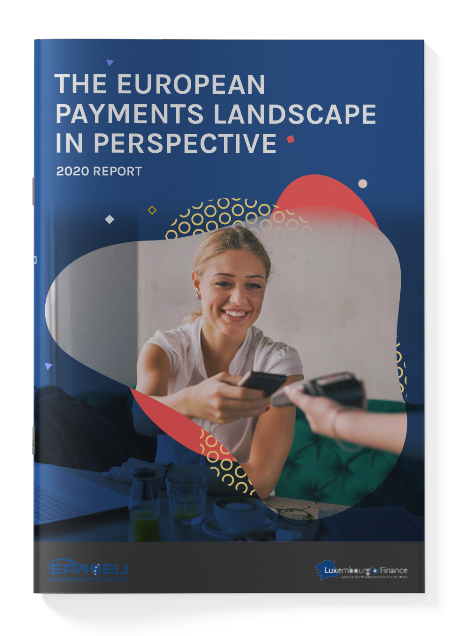
In the following pages, we offer an overview of global trends looking at some of the world’s leading payments markets, followed by a focus on key European markets and regions.
As a result, this study aims to provide a survey of the rapidly changing payments landscape around the world, comparing and contrasting the uptake of fintech in the payments sector in multiple geographies. It also looks at environmental factors supporting (or hindering) the emergence of new methods of payment. In doing so, it attempts to provide clues as to why some geographies are approaching fully cashless societies, while elsewhere paper notes remain de rigeur.