trending










 Open banking is fast becoming a worldwide phenomenon.
In 2018, the adoption of the revised payment services directive, PSD2, set the stage for Open Banking across Europe. PSD2’s Open Banking mandate, which came into force in September 2019, provides open access to customer payment accounts and bank infrastructure. From a legal perspective, PSD2’s framework enables Open Banking by permitting bank clients and businesses to use third-party service providers to manage their finances.
In practice, Open Banking in Europe uses Open API technology to enable third-party service providers and banks to build new customer centric financial applications and services. At the same time, bank clients have made their smartphones the centerpiece of modern living and digital banking, which challenges European banks to focus on improving the bank client’s digital experience.
Three years post UK go-live in early 2018, and 18 months after the Open Banking provisions of PSD2, Open Banking is playing a significant role in stimulating innovation in financial services, implementing immediate payment services, and launching digital payment service schemes enabling payments directly from bank accounts.
Across the continent, European countries are now home to either regulatory-driven or industry-led open banking initiatives and new digital payment service schemes which extend digital banking services to merchants and P2P money transfers.
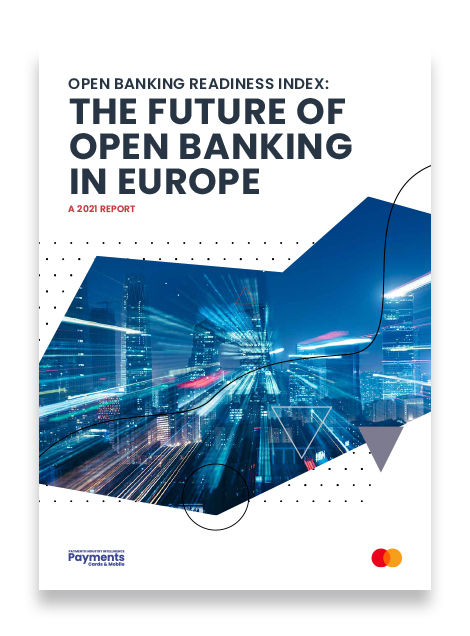
However, European countries have each forged their own path to the implementation of Open Banking. This report compares selected European markets in terms of their regulatory readiness adopting the PSD2, their Open API readiness, the digital infrastructure readiness, and notable Open Banking innovation.
The objective of this report is to provide an Open Banking readiness status for ten selected European countries in March 2021. Our report:
Each of the brief country reports below provides insight into that country’s individual Open Banking characteristics, the status of digital A2A payment schemes, and the country’s Open Banking readiness in March 2021, including:
In particular, the report provides insight into the different individual approaches taken by ten European countries: