 trending











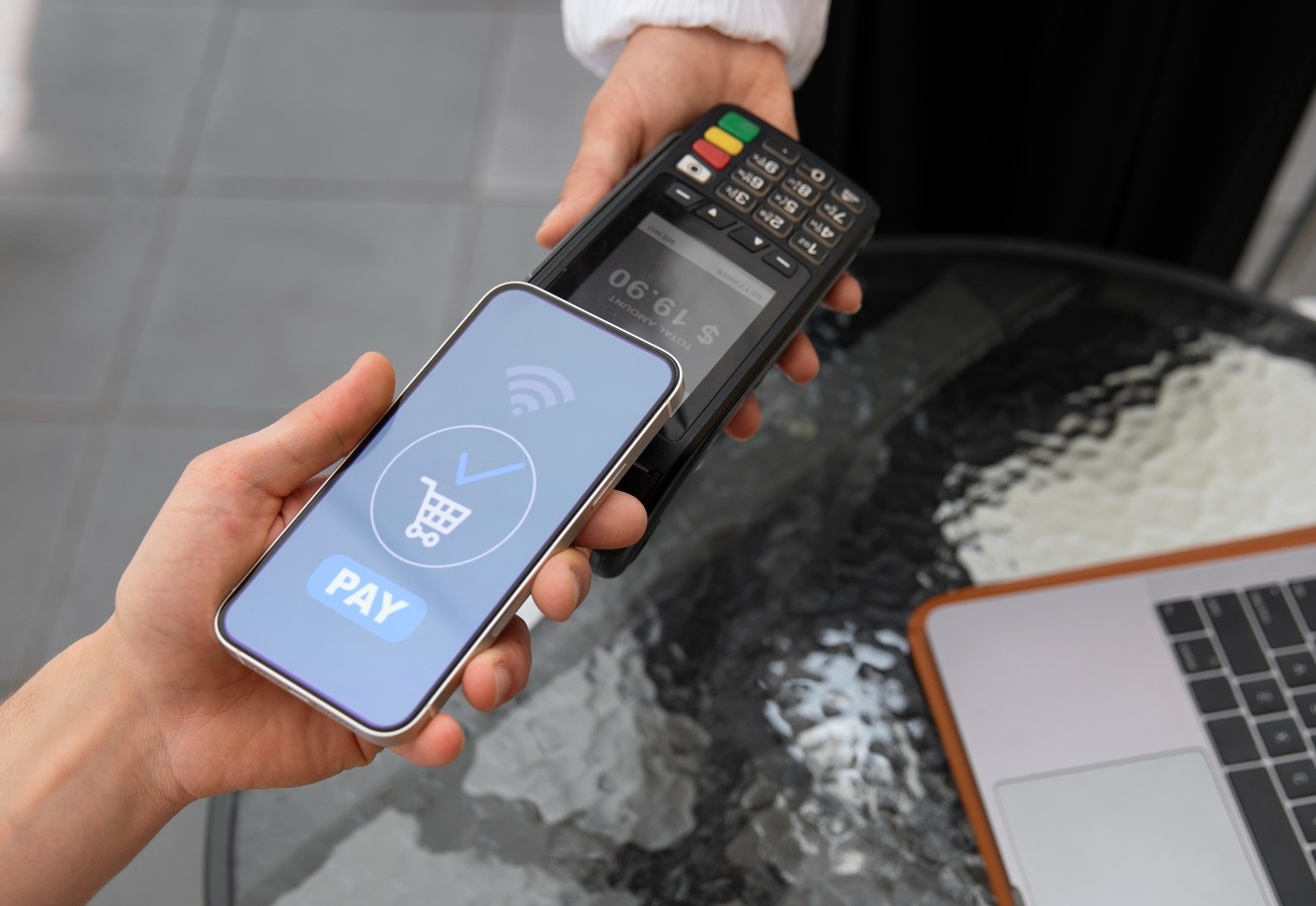
Generation Alpha is the first cohort to grow up in a largely cashless society. Where grandparents once paid in shillings, francs or lira, fishing coins out of purses or pockets, today’s generation authenticate payments with a face scan, tapping mobile wallets to a terminal or making a single click online.
Payments on the move
Payment methods have changed dramatically, but one thing has remained static: the checkout. In store, customers select their items and stand in line, waiting to pay for their purchases – writes Tommaso Jacopo Ulissi, Head of Strategy and Transformation at Nexi Group.
Online, the process is similar: search or browse items, add them to your basket, and then complete a checkout page to confirm your purchase.
In terms of customer experience, it’s familiar yet uninspiring. Trusted, yet impersonal. Functionable, but forgettable.
Merchants looking to differentiate themselves in today’s hyper-competitive markets have an opportunity to change this by rethinking their approach to the checkout, offering an experience that adds mutual value to the business and its customers.
Three trends are driving this change.
Trend one: Software-based payments
Across Europe, MSMEs (Micro, Small, and Medium Enterprises) have enjoyed steady growth as consumers shop locally with independent merchants. As a result, they have grown in economic importance, accounting for approximately 90% of all businesses globally and 50% of GDP.
Historically, these MSMEs have relied on cash payment, which was convenient and easy to accept. However, as cash use declined, MSMEs had to pivot to digital payments.
Until recently, many MSMEs considered digital payment acceptance to be out of reach, due to costs involved in acquiring and operating the right hardware. Various mPOS hardware solutions targeted these merchants, making digital payment acceptance more accessible for smaller players. But still it required investment in the right hardware.
Today, software-based payment solutions have begun to emerge and scale, further democratizing the payments landscape.
Empowering your points of sale
Merchants today are transforming their personal smartphones into payment acceptance terminals. A device they already own is transformed into a ‘SoftPOS’ device to reliably and securely accept contactless and QR code-based payments.
For MSMEs, this offers an ultra-accessible, highly convenient and highly-secured payment acceptance solution that is easy to set up and operate, and relatively low cost compared to traditional POS hardware.
For micro merchants – think gardeners, hairdressers, plumbers or house cleaners – this is a game changer, enabling them to accept digital payments, wherever their job may take them. No more awkward bank transfers in doorways, rigid direct debits or promises to send payments later. Just simple, fast and trusted payments.
The benefits of SoftPOS are not limited to MSMEs either. Larger merchants, such as high-street stores and chains, can use SoftPOS to untether staff from the checkout desk.
Now free to accept payments where the customer is, staff can be redeployed to engage with shoppers throughout the store, offering more personalized shopping experiences and creating additional upsell opportunities. It can also remove barriers to sale by eliminating checkout queues.
Smart payments for smarter business
Larger merchants are also looking to get more value from their POS systems today, recognizing that payment-acceptance tools offer untapped potential in terms of managing business operations.
Known as ‘SmartPOS’, merchants are increasingly using smart payment terminals to manage everything from returns to loyalty programs and promotions, as well as inventory management, order management, and customer feedback.
By consolidating multiple operations through a single terminal, merchants reduce the complex web of vendor hardware and software they rely on. This defragments the merchant offer and increases the efficiency of in-store staff, who can spend more time helping and engaging with customers.
Armed with more accessible and integrated data from across the business, staff have everything they need at their fingertips to deliver a hyper-personalized, rewarding customer experience. For example, one waiter armed with SmartPOS could take payments, manage restaurant bookings, handle delivery requests and track inventory.
They could also operate loyalty programs that reward repeat customers, or offer personalized promotions based on special events or personal favorites. By leveraging the data offered through SmartPOS devices, they can also propose promotions designed to drive sales during typically slow days or times.
Trend two: Integrated payments and partnerships
Consumers today have raised expectations for fast, personalized services. In a world where every interaction contributes to overall satisfaction levels – particularly in retail or hospitality environments – value-added services, such as returns, loyalty programs and promotions, were once differentiators but are now the norm.
Yet many merchants today rely on a variety of different vendors to offer such services. Most of these don’t integrate well with one another, creating a fragmented and highly inefficient experience.
This is why Independent Software Vendors (ISVs) are forming partnerships with payment providers, as it enables complementary benefits to be activated for consumers by either providing payments as part of an integrated software offering, or by providing a full value chain of services in the best way.
No merchant starts its journey by asking itself what payment provider it should use; most want one single all-in-one system that is ‘plug and play’. This approach to “payments inside” is designed to support sector-specific requirements.
For example, a single commerce system for a restaurant should be able to take bookings, allocate tables, assign waiting staff, manage inventory and provide trusted, invisible consumer payment options.
By integrating payment systems within wider business software, merchants can ensure consistency across channels, with no discrepancies in pricing, discounts, or loyalty rewards.
Trend 3: From checkout to chat
We’re also on the cusp of potentially the most significant change to online shopping since e-commerce began.
In the retail world, the promise of Agentic Commerce is that everyone can have their own personal, highly intelligent shopping assistant that can act upon user instruction and even be authorized to complete purchases.
Google Cloud recently announced its open protocol – Agent Payments Protocol (AP2) to securely initiate and transact agent-led payments across platforms.
Meanwhile, Open AI, the organisation behind ChatGPT, now not only enables customers to activate an ‘Agent’ functionality on the platform to search for and refine products/services, but with the recently announced ‘Buy it in ChatGPT’ functionality, customers can now also make single-item purchases with select merchants in the US without leaving the platform.
The Buy it in ChatGPT protocol is also open-source, enabling merchants and developers to begin building integrations into their back-end in preparation for consumer adoption.
These moves are all shaping a fundamental paradigm shift in commerce: one where merchants must be empowered to continue competing on a global scale, delivering frictionless, personalized shopping experiences to consumers.
While the technology is not yet mature, it is easy to see the huge potential: it offers a scenario where – for example – a consumer asks to find the cheapest first-class flights from New York to Milan between May and September, with a morning outbound flight and evening return, vegetarian breakfast and extra leg-room.
The AI agent does the heavy lifting in seconds and presents the customer with personalized options to accept, completing the purchase using secure, tokenized card details.
In this scenario, the traditional checkout – where the user browses a site and adds items to a basket – is removed entirely. It brings a world of personalization to the consumer in a way that could be transformative for all commerce. But it is not without risk.
Unanswered questions remain, especially liability: who is responsible for remedying a situation if something goes wrong?
If the AI agent booked a flight to Miami instead of Milan, who is liable for the error? If the agent books via a scam website, who will reimburse the customer? What commission will the AI platform take?
ChatGPT has previously discussed charging a two percent affiliate fee – and merchants will have to decide if the trade-off is worth it.
They will also have to grapple with a whole new way of shopping: if commerce becomes conversational as standard, with consumers telling AI what they want rather than browsing pages and filling baskets, the opportunities for upsold or impulse purchases could decline dramatically.
These changes to the merchant offer and consumer checkout aren’t going to reach everyone overnight, but merchants that recognize this shift early will have the opportunity to differentiative and elevate their customer experience ahead of their competitors.
As time goes on and more merchants join the transition, these enhanced offers will become the norm.
A static checkout risks static growth: if you don’t take checkout innovation to your customers, they will take their business elsewhere.




Comments