 trending











A new report from Wind River Payments reveals that US merchants and software providers are rapidly rethinking how they handle payments in response to rising costs, fraud, and a volatile economy.
According to The 2025 Payments Report: Macro Pressures Shaping the Landscape for Software Providers and Merchants, 69% of merchants have already changed how they accept or process customer payments, while another 12% plan to do so soon.
Merchants Get Strategic About Payment Costs
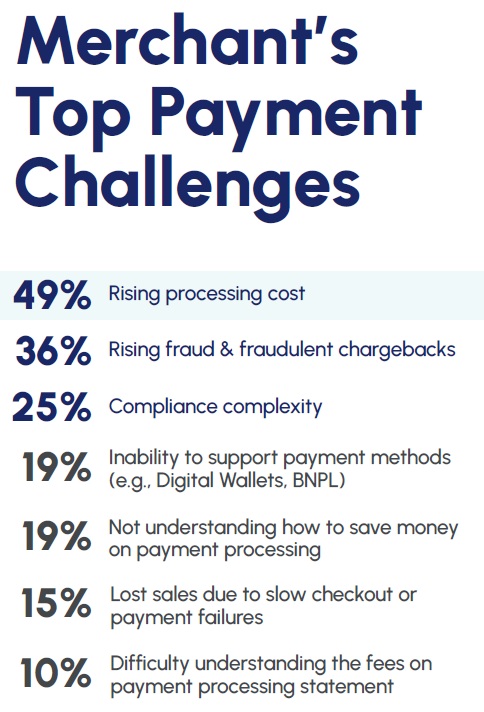 With payment processing fees climbing and inflation squeezing profit margins, merchants are becoming more deliberate in their payment strategies.
Nearly half have seen their processing rates increase in the past year. In response, 46% are raising prices, 36% are adding surcharges, and 40% are absorbing costs or cutting expenses elsewhere.
To reduce card fees, nearly a quarter of merchants are encouraging debit or ACH payments (25%), offering cash discounts (23%), and adding fees to credit transactions (25%).
This marks a significant cultural shift: payment acceptance, once treated as a routine cost of doing business, is now viewed as a lever for financial resilience.
“Merchants are being smart about every dollar,” said Stephanie O’Connor, Director of Merchant Experience at Wind River Payments.
“This isn’t just a temporary reaction — it represents a fundamental reshaping of how merchants approach transactions to safeguard their business.”
Fraud Becomes a Flashpoint — and Opportunity
Fraud has emerged as another defining pressure point. Nearly two-thirds of merchants experienced payment fraud last year, with fraudulent chargebacks (28%), refund scams (25%), and phishing attempts (20%) topping the list.
The financial impact is tangible: 34% reported direct fund losses, while 27% suffered lost or delayed revenue.
An overwhelming 88% of merchants said they would pay more for enhanced fraud protection — a signal that software vendors offering built-in fraud prevention can deepen trust and create new revenue streams.
ISVs Turn to Integrated Payments for Growth
Independent software vendors (ISVs) are also feeling the pinch. With inflation and rising operating costs named by 47% as their top concerns, many are leaning on integrated payments to stabilise income.
The report found that 41% of ISVs now derive more than half of their total revenue from payments, and 96% plan to explore new monetisation models this year.
Integrated payments are increasingly seen as a differentiator rather than a utility, helping ISVs boost customer satisfaction, retention, and platform stickiness.
Yet adoption remains uneven: 65% of ISVs say less than half of their customers currently use integrated payments, suggesting substantial headroom for growth.
The Bigger Picture
The 2025 findings underscore a new reality: in a tougher economic climate, payments strategy has become central to commercial success.
Merchants are steering consumers toward lower-cost methods, while ISVs are monetising the payments flow itself. As Tyler Kattre, President of Wind River Payments, notes, “Payments have evolved from a back-office function to a strategic lever.”
For both merchants and software providers, mastering that lever could be the key to staying competitive in 2025’s turbulent economy.






Comments