 trending




In 2025, payments infrastructure modernisation is no longer a luxury – it’s a necessity.
As the regulatory clock ticks down towards key compliance deadlines for SEPA Instant Payments and SWIFT ISO 20022, banks across Europe, the Middle East, and Africa (EMEA) are scrambling to update ageing systems and unlock the benefits of real-time, data-rich financial infrastructure.
Volante Technologies’ Big Survey 2025 paints a vivid picture of this transformation, revealing both momentum and misgivings in equal measure.
Big Survey 2025
Nearly every bank surveyed – 99% – is either planning to implement a new payments solution or has recently done so.
Over half (52%) expect to roll out their new systems within six months. This urgency reflects a sector feeling the pressure from regulators, customers, and digital challengers alike.
But modernisation doesn’t come cheap.
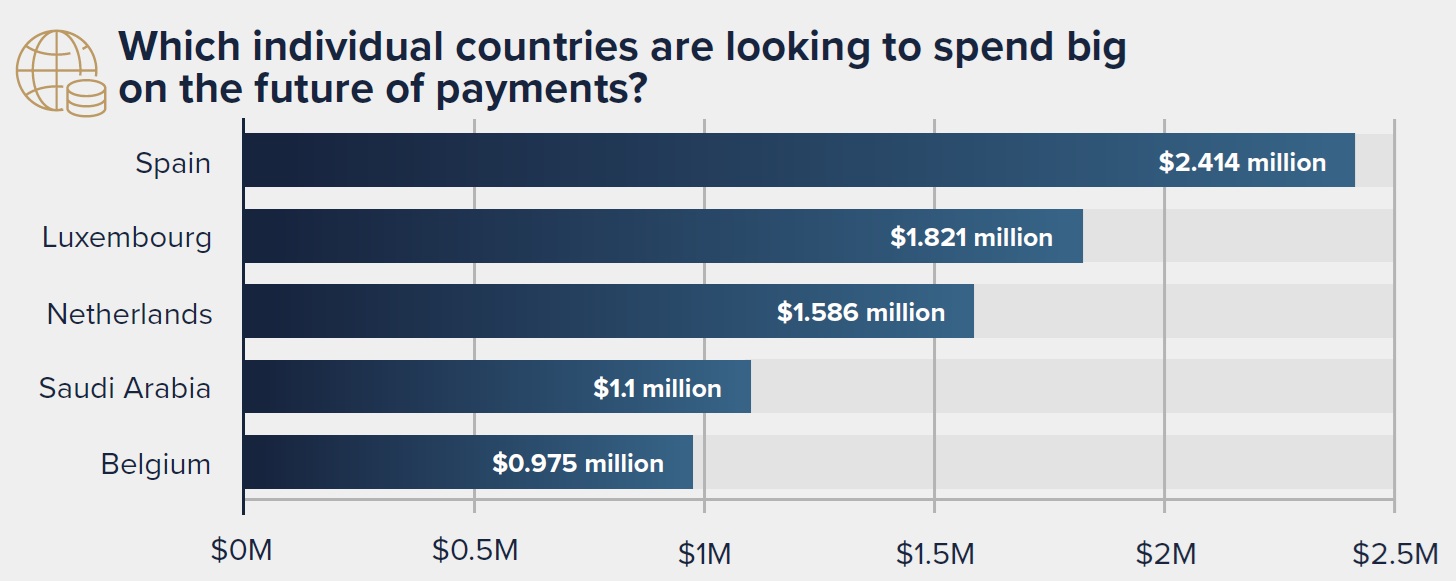
Banks are putting their money where their strategy is: 88% expect to invest between $500,000 and $5 million in modernising their payments infrastructure over the next year, with the average spend approaching $1.5 million.
Spanish banks are the most bullish, budgeting over $2.4 million on average, while Belgium trails at under $1 million.
The Biggest Obstacle to Progress
Despite the investment, the biggest obstacle to progress is not cost – but complexity.
The most frequently cited concern is selecting the right vendors and technology partners, with 38% of respondents highlighting this as a key barrier.
This surpasses even fears around cybersecurity and fraud, which 34% of banks acknowledge – particularly in Sweden and Saudi Arabia, where rapid adoption of instant payments brings elevated exposure to fraud risks.
The infrastructural backbone of modernisation is also under scrutiny.
A hybrid cloud model – blending private data centres with public cloud flexibility – is emerging as the preferred approach, adopted by 58% of banks.
Fully cloud-native institutions remain rare (13%), although Middle Eastern and Iberian banks lead the charge.
In contrast, 27% of EMEA banks still rely on legacy systems at least a decade old, a drag anchor on agility and innovation.
Payments-as-a-Service (PaaS)
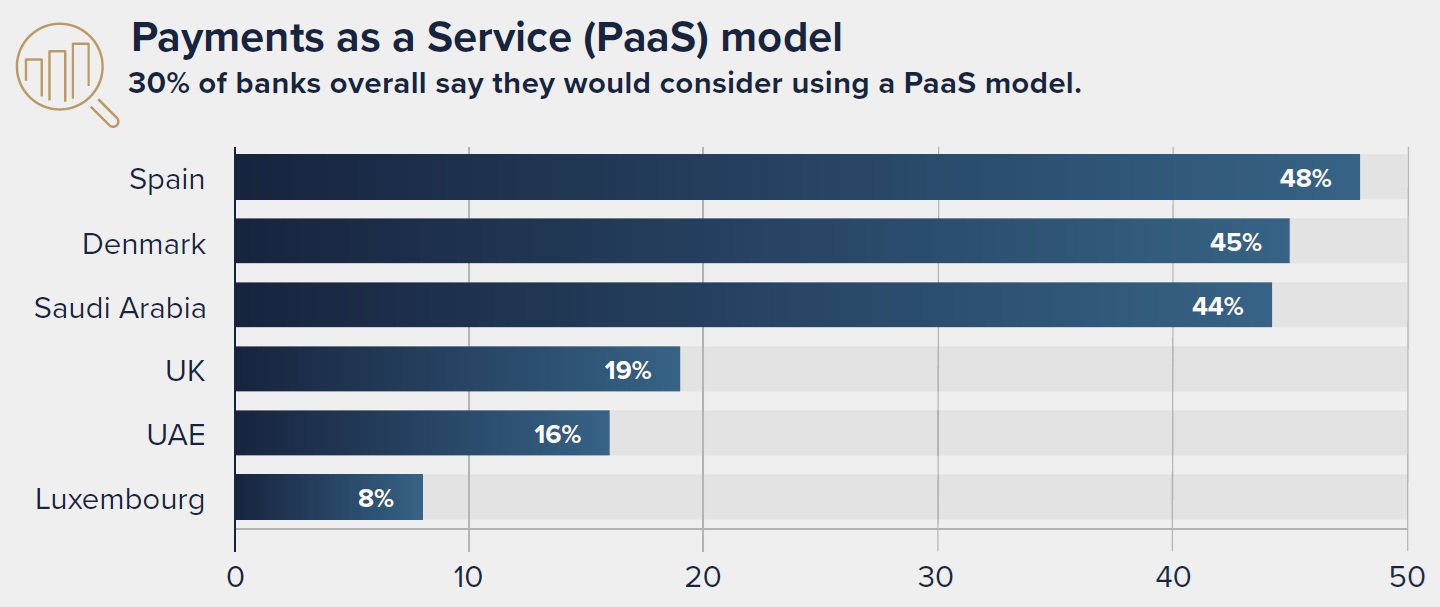
Meanwhile, the Payments-as-a-Service (PaaS) model is gaining traction, especially in Spain and Denmark.
But overall uptake remains tepid, with only 30% of banks open to PaaS.
This hesitancy reflects lingering caution around outsourcing mission-critical services – even as internal skills shortages and mounting pressure to launch new products argue for modular, cloud-native solutions.
Motivation to Upgrade?
What’s motivating banks to upgrade? Regulatory compliance is important – but not paramount.
Just 15% say it’s their primary motivator.
Instead, cost efficiency and operational resilience (29%) top the list, followed closely by customer expectations for real-time payments (20%) and competitive pressure from fintechs (18%).
Interestingly, these drivers suggest that many banks are modernising not out of obligation, but out of ambition.
Yet ambition without alignment can be risky.
As of mid-2025, more than half (54%) of banks are relying on translation services to meet ISO 20022 requirements – an interim solution at best.
Only a third (32%) have achieved full native compliance, while a worrying 14% are still exploring options, with UK banks most likely to be unprepared.
This lag could expose them to regulatory penalties and reputational damage.
Performance metrics reflect this tension between vision and reality.
Just over half of banks (52%) measure success via transaction volume and revenue growth.
But many also emphasise customer satisfaction (43%) and time-to-market for new services (42%) – indicating a broader recognition that agility and customer centricity are essential for future competitiveness.
The takeaway?
Payments modernisation is happening, but it’s not always happening wisely.
As banks rush to meet compliance deadlines, the real challenge lies in choosing the right long-term partners, architectures, and strategic priorities.
The winners will be those who modernise with clarity – not just speed.



Comments