 trending











In the last iteration of Economist Impact’s global banking survey, conducted in 2021, banks were facing a perfect storm as the pandemic accelerated consumer use of online banking, hastening the closure of bank branches and seemingly giving a strong advantage to digital-first competitors.
With fintech start-ups, payment players, super-app platforms and tech giants continuing to take market share as they gained the ability to offer more traditional banking services, incumbent banks were compelled to reassess their priorities and business models.
Today, 40% of banks see Big Tech as their biggest competitors in the next five years as the next generation of customers prefer one-stop-shop solutions when purchasing online – the new battleground between banks and other non-financial companies entering the payments market, according to the latest Economist Impact report.
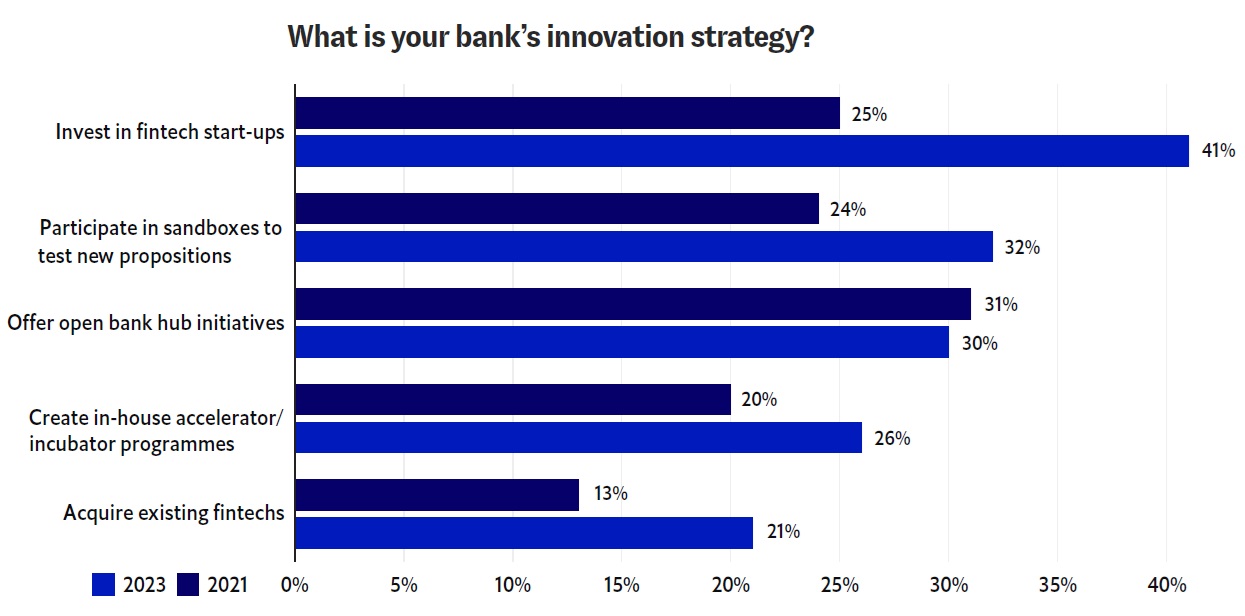
The influence and threat of Big Tech companies such as Google and Microsoft have increased sharply in the last three years.
This replaces global payment players such as PayPal as the biggest concern due to their one-stop-shop solutions when purchasing online, offering instant global contactless payments all on one interface as the next generation sees increased exposure to newer payment methods.
Over a third of US consumers now find bank transfers too slow (35%) or too expensive (36%). Dissatisfaction is even higher among younger generations, with over half of millennials and 43% of Gen Z unhappy with the speed of bank transfers.
“When the young generations, who were born with phones in their hands, become clients, they will have much more of a focus on the technology,” says Schuyler Weiss, CEO of Alpian, a Swiss neobank (that is, a bank that operates exclusively online, without bricks-and-mortar branches).
“If you do not have modern technology, they will not bank with you, it doesn’t matter how long you’ve been around.”
Meanwhile, other competitors in the industry – such as the rise of Challenger Banks (Monzo, Tide etc) are now a falling concern for banks as they look to deepen their collaboration with fintech companies to stave off competition.
Nearly half of all banks are looking to acquire majority stakes in fintech to consolidate their market offering and become the one-stop-shop solutions when purchasing online to increase access to technology and a suite of financial solutions.
This has the overall effect of reducing market competition and creating a payment service offering that can rival large incumbent technology giants.
“The new battleground for banks is being fought over the future of the payments industry,” says Mick Fennell, Business Line Director at Temenos Payments.
“The next generation is demanding a new level of sophistication when it comes to instant payments.
Banks that want to thrive over the next decade need to be able to incorporate an offering that is instant, seamless and secure so they continue to operate as everyday payment providers to their customers and keep up to date with the expectations being set by the global technology giants.”





Comments