 trending







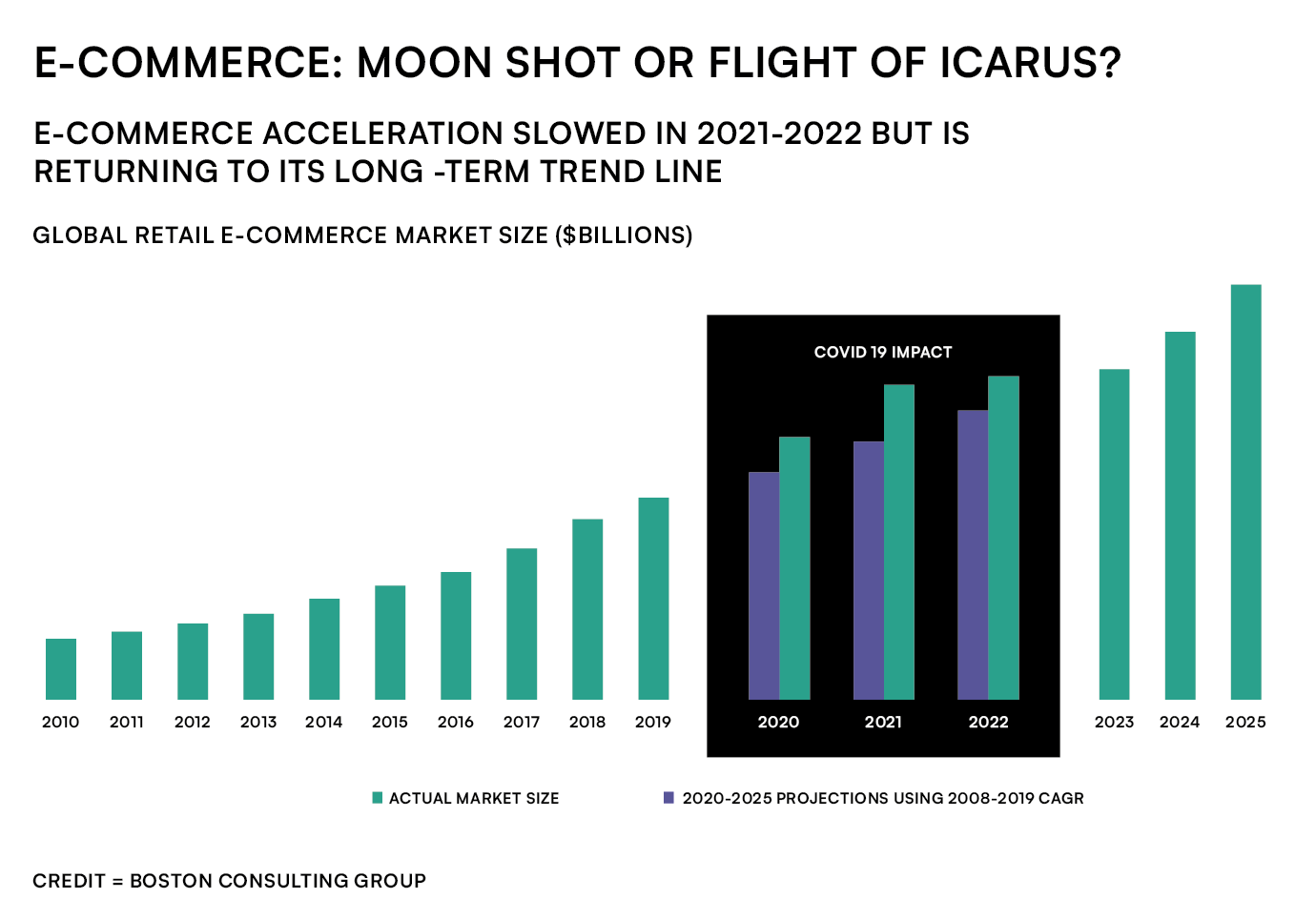
The stats just don’t stop telling the same story. While e-commerce growth has slowed after the pandemic, it’s still grabbing an ever-growing share of wallet.
In more developed markets such as Europe and North America, growth is down to single digits in 2023 – but that needs the context that growth in 2020-2022 hit around 20%.
In other words, digital sales are up around 50% compared to three years ago. According to a new report from the Boston Consulting Group, e-commerce will account for 41% of all global retail sales by 2027, up from just 17% in 2017.
Boomers go online – and get banged
BCG also say that growth in Europe especially is being driven by older generations taking up the online habit, with those under 35 now more or less steeped in digital shopping.
Digital shopping in the boomer generation (1946-64) grew twenty times faster than in Gen Z (1990 onwards), while at the same time the share of e-commerce for major retailers dropped by 10% in the last two years as more small chains and micro-merchants took up the digital habit.
And herein lies the problem – as those less used to e-commerce, either from a merchant or shopper perspective, take up the habit, we’re going to see more anxiety and concern about the risks of online shopping.
Criminals will not be slow to exploit merchant and consumer naivete, either.
“As more older shoppers go online, expect concerns – and fraud – to rise fast.”
New research from the US National Crime Agency (NCA) and CybSafe shows just how much older generations are both concerned about – and worried by – online fraud.
More than one in three shoppers in the US, UK, Canada, Germany and France are worried about being defrauded while shopping online – and they’re right to be, since roughly the same numbers say they’ve already been the victim of either e-commerce fraud or some other online scam.
“NCA data suggests Gen Z is getting complacent about online security.”
While around eight in 10 consumers say online security should be a priority, far fewer have undergone any kind of education or training about how to stay safe online.
Perhaps the most eye-opening finding in the NCA/CybSafe study is that Gen Z shoppers are more likely than their older counterparts to use easy-to-guess personal details in their passwords – a finding that hints at shocking levels of complacency.
Payments Cards & Mobile Opinion:
At a time when the talk is of yet more investment in AI and ML to fight fraud, the importance of certain hygiene factors in ensuring online security can’t be stressed enough.
Rather than spending more and more on software, perhaps banks should also be making somewhat cheaper – and arguably just as effective – investments in customer awareness and education programmes.
As with other surveys we’ve seen of late, this most recent data points to the importance of comprehensive, consumer-controlled digital ID solutions as being vital to securing the longer-term future of e-commerce.
How long will it be before the next Aadhaar or British Airways scandal, in which the payments details of millions are leaked?
We have yet to see massive-attack style waves of fraud against consumers, but it can’t be too long before something similar happens.




Comments