 trending








When Western governments cut major Russian banks off from the Swift messaging system in the wake of the 2022 invasion of Ukraine, they hoped to choke the country’s ability to move money across borders.
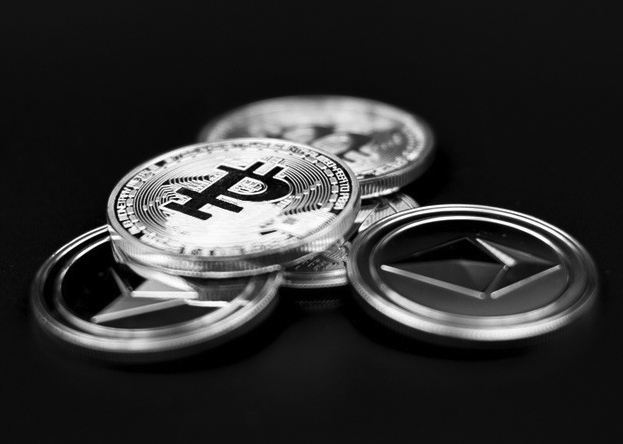
Stablecoins: Inside Russia’s shadow payments network
Instead, the pressure has accelerated the creation of a parallel payments ecosystem that blends cash, crypto, promissory notes and state backing. At the centre of this experiment sits A7, a Kremlin-linked venture founded in late 2024.
A7 presents itself as a solution to a practical problem: how Russian companies can continue paying foreign suppliers when conventional correspondent banking routes are blocked or politically risky.
Its answer is not one single technology, but a layered architecture that deliberately sits outside traditional banking rails.
From Imitation Banknotes to Stablecoins
The most eye-catching element of A7’s model is its issuance of colourful imitation banknotes, styled with skylines of Russian cities.
Marketed via Telegram to tourists and businesses, the notes function less like cash and more like bearer instruments. Holders can redeem them for roubles in Russia or for foreign currency abroad using QR codes and local agents.
More strategically important, however, is the digital layer. A7 has been closely associated with A7A5, a rouble-pegged stablecoin backed by deposits at Promsvyazbank.
According to blockchain analytics firm Elliptic, cumulative transaction volumes linked to the token have already exceeded $100bn, underlining how crypto instruments are being repurposed for wholesale trade settlement rather than speculation.
Promissory Notes and Payments ‘Outside the System’
A7’s core proposition to Russian importers is deceptively simple. Businesses purchase promissory notes from A7 and pass them to overseas suppliers as an IOU guaranteed under Russian law.
A7 then assumes responsibility for settlement, claiming the process occurs “outside the banking system” and without Swift.
Leaked documents, analysed by TRM Labs, suggest a more complex reality involving cash movements, cryptocurrencies and networks of intermediary companies in jurisdictions such as Kyrgyzstan and China.
While these claims are difficult to verify independently, the scale of reported activity points to an operation that has moved far beyond informal sanctions workarounds.
State Endorsement Changes the Risk Equation
What differentiates A7 from earlier grey-market payment agents is political sponsorship.
Despite being sanctioned by the US, UK and EU, the company has continued to expand domestically and abroad, with President Vladimir Putin publicly endorsing its growth.
In November, Russia’s finance ministry went further, co-founding a promissory-note venture with A7 and Promsvyazbank.
For the global payments industry, the lesson is uncomfortable but clear. Sanctions may fragment the financial system, but they also catalyse innovation.
A7’s rise shows how quickly alternative infrastructures can emerge when states are willing to blend legal instruments, crypto technology and political power to keep money moving across borders.



Comments