 trending









Artificial intelligence has become the latest weapon in the arsenal of organised fraudsters, driving a sharp rise in fraud and scams across the UK.
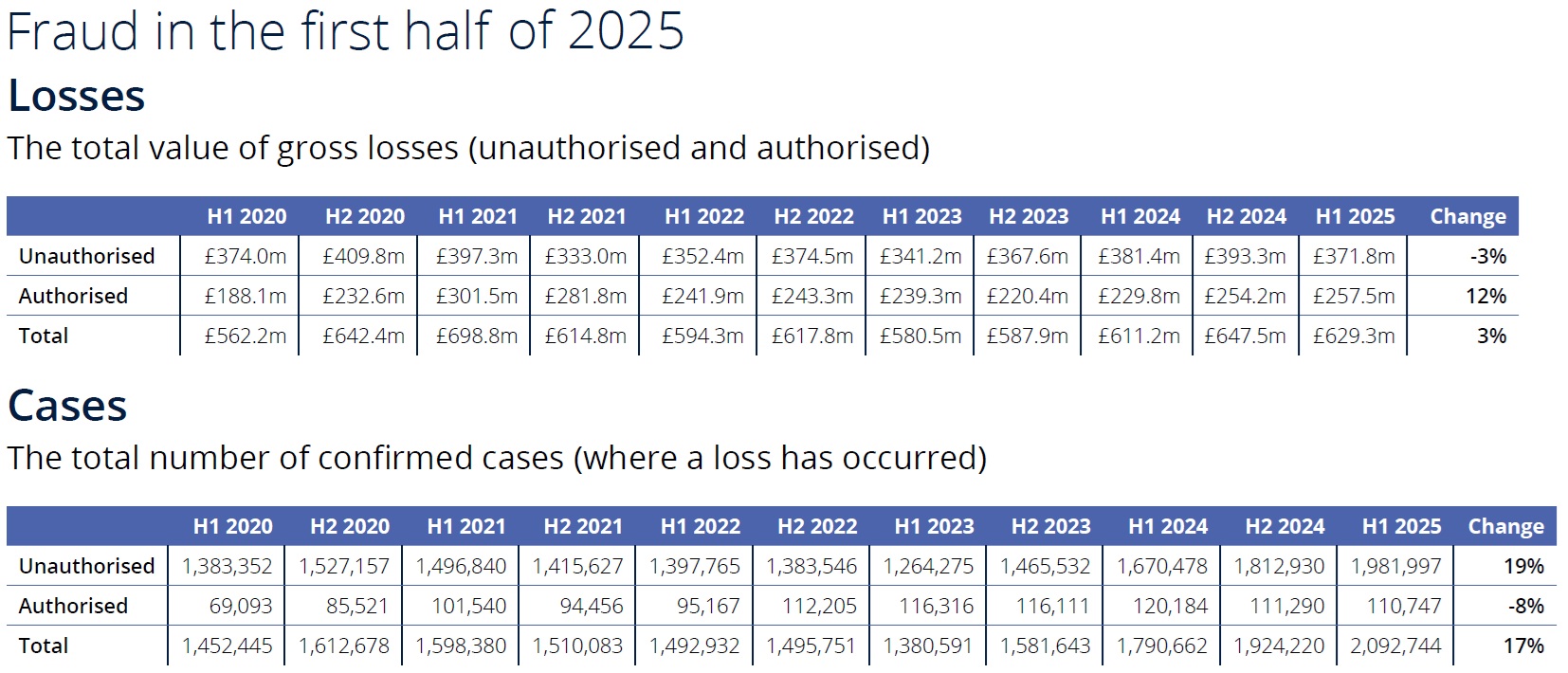
According to new data from UK Finance, criminals used AI to supercharge investment and romance scams in the first half of the year, pushing total confirmed fraud cases past 2 million — a 17 per cent increase on the same period last year.
Losses climbed to £629 million, up 3 per cent, underscoring how technology designed for innovation is increasingly being turned against consumers.
Ben Donaldson, managing director of economic crime at UK Finance, said AI was enabling criminals “to enhance tried and tested tactics more quickly, at a greater scale, in different languages and to a greater effect.”
The availability and low cost of AI tools has allowed fraudsters to automate and personalise their attacks, from mass phishing campaigns to eerily convincing deepfakes.
“It’s almost impossible for victims to know if AI was involved, but anecdotally, it absolutely has been,” Donaldson added.
Investment and Romance Scams Hit Record Highs
The most striking rise came in investment scams, where losses surged by 55 per cent to nearly £100 million, with an average loss of more than £15,000 per victim.
Scammers are now using deepfake videos featuring well-known financial figures to promote fake cryptocurrency schemes or investment “opportunities”.
Victims are lured to professional-looking websites displaying fabricated performance dashboards and even small, staged withdrawals to build trust before being persuaded to invest larger sums.
Romance fraud has also grown alarmingly, rising 19 per cent in cases and 35 per cent in losses to £20.5 million.
These scams often span months, as criminals manipulate victims emotionally to send repeated payments — UK Finance reports an average of nine transactions per case, with some stretching beyond 100 transfers.
Banks Fight Back with AI — But Criminals Adapt
While criminals exploit AI, banks are deploying the same technology in defence.
UK Finance said that in H1 2025, banks prevented £870 million in unauthorised fraud — up 20 per cent year-on-year — equating to 70p stopped for every £1 attempted.
Ruth Ray, director of fraud policy at UK Finance, noted that AI-powered systems are now detecting subtle behavioural anomalies in real time, identifying when a customer may be “under the spell of a fraudster.”
Yet as defences strengthen, criminals are shifting tactics. Many are conducting multiple smaller-value transactions, often purchasing easily resold items such as gift cards to evade detection.
“SMS blasters”
The report also highlights a worrying new frontier in physical fraud: “SMS blasters” disguised in cars and suitcases have been used to send mass scam texts across central London.
Victims clicking these links are directed to fake websites impersonating trusted institutions.
UK Finance argues that tackling this epidemic requires cooperation across industries.
“Rather than rely on banks to prevent crime at the moment it’s happening, we should be working together to stop it before it starts,” Donaldson said — a call that places responsibility squarely on telecoms and social media platforms to strengthen their own fraud-prevention systems.
As AI reshapes both legitimate innovation and criminal exploitation, the UK’s fraud fight has entered a new and more complex phase — one in which human vigilance and machine intelligence must evolve together



Comments