 trending









Credit cards are tightening their grip on Canada’s consumer payments market, with their share of personal expenditure set to climb sharply over the next five years.
According to The Canadian Payments Forecast 2025, published by Technology Strategies International (TSI), credit card spending is expected to represent 64% of personal consumption expenditure (PCE) by 2029, up from just over 50% in 2020.
The report underscores how credit cards have moved beyond their traditional role at the physical checkout to dominate virtually every payments channel.
Whether in-store—via chip, tap, or contactless wallets—or online through e-commerce, mobile apps, and wearable devices, credit card payments are now the default choice for Canadian consumers.
Growth Has Been Steady
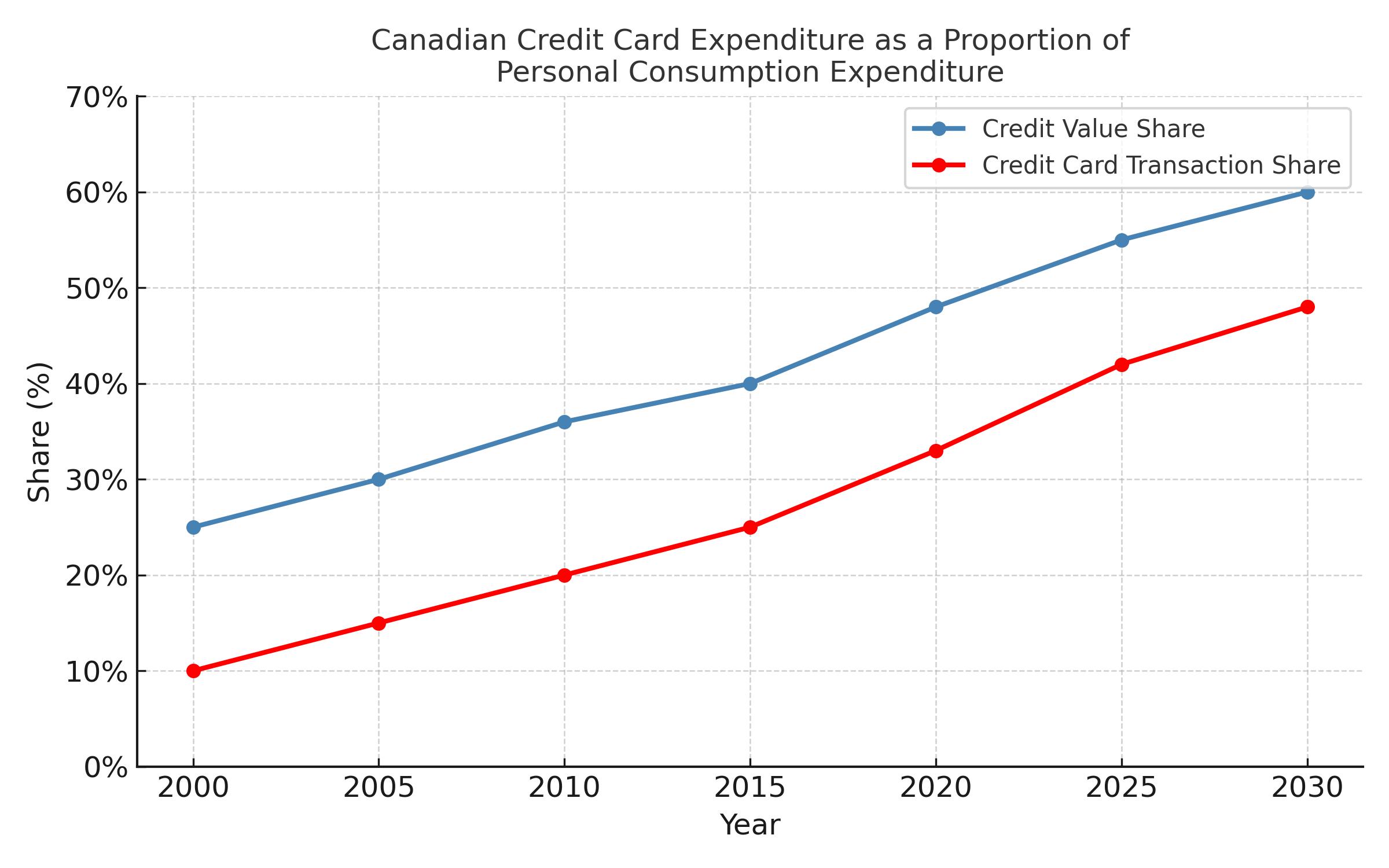 Growth has been steady and strong: the value of credit card transactions has expanded at a compound annual rate of 8.6% between 2014 and 2024.
By contrast, debit card payments have grown at a more modest 3.3% annually. Cash and cheque usage, once core components of the payments mix, have continued their structural decline, while other payment instruments have remained largely flat.
The only remaining areas where credit cards lag are in bill payments and pre-authorised transactions, which Canadians have traditionally linked directly to their bank accounts.
Yet even here, momentum is shifting. Uptake of pre-authorised credit card payments is rising, suggesting households are increasingly prepared to consolidate recurring outgoings under a single credit facility.
Despite credit’s growing dominance, debit remains an important secondary instrument. It accounts for around 17% of PCE by value and 29% of all consumer transactions, a share that TSI expects will remain stable through the forecast period.
Shifts in Consumer Behaviour
The report highlights several additional shifts in consumer behaviour.
Mobile bill payments are surging, accounting for nearly three-quarters of online bill settlement by value in 2024.
Meanwhile, cryptocurrency has carved out a foothold in the Canadian payments landscape: almost one in four adults reported either trading or transacting with digital assets over the past year.
In-store mobile and wearable payments are also expected to grow rapidly, outpacing most other categories in the next five years.
For banks, networks, and fintechs, the findings present both opportunities and risks.
Credit cards’ expanding reach cements their role at the centre of consumer payments, but also heightens competition for share of wallet.
As Canada edges closer to a near-cashless society, innovation in mobile, digital, and alternative payments will determine how the market’s next phase unfolds.





Comments