 trending










With the largest Asian population outside China, a swiftly-liberalising economy plus a banking sector that’s growing in dynamism, it’s no wonder international players want to get into Indonesia.
Once associated in the Western popular imagination with heroic exploits by rugged heroes, and more recently with all kinds of wonderful coffees, Indonesia has been quietly building a dynamic, modern economy for more than 30 years.
While many of its trends are not specific to Indonesia, the speed with which they’re happening – and the power of more than a quarter of a million consumers in a growing economy – make this vast archipelago a market to watch over the next decade.
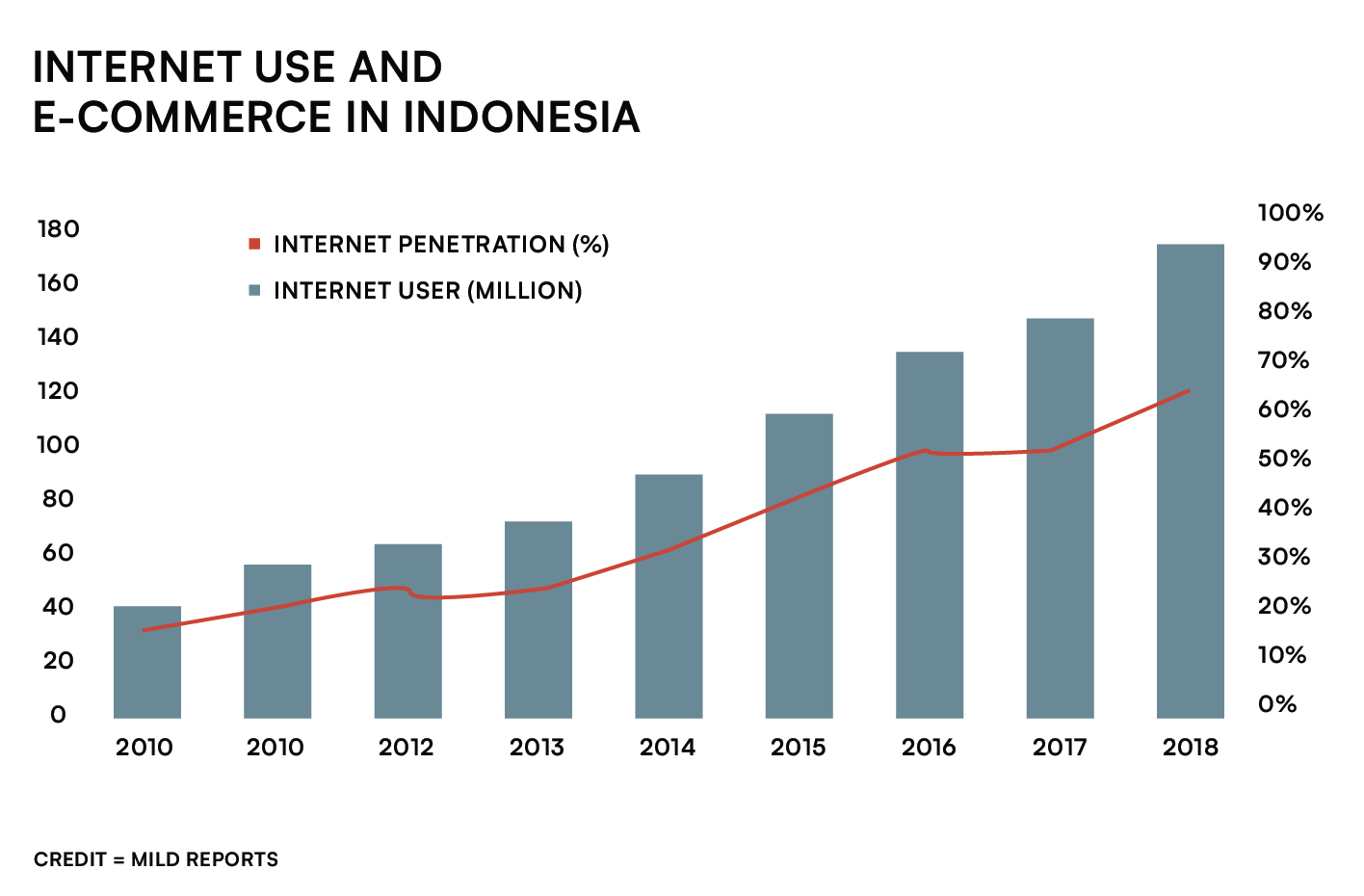
Cash falls off a cliff, digital soars
To start with, it’s a commonplace among rising Asian economies that the use of cash is being replaced by digital wallets.
As in Vietnam and Thailand, so in Indonesia: but the speed of this replacement in Indonesia is remarkable, supported by both banks and the government.
Since 2020, the use of cash for payments has fallen from over 70% of transactions down to 51%.
At the same time, the number of credit cards in the country has remained stagnant at around 17 million – clearly, credit cards remain a product reserved for the elite among some 272 million Indonesians in total.
While there are far more debit cards (at 226 million), these are beginning to feel like something of a legacy product, since many were linked to a vast ATM network which is now less used as cash declines.
And that ATM network was itself necessary to support a vast unbanked population of around 181 million, or some 66% of the total in the country at the last count.
In another pattern international observers will recognise, Indonesian consumers are making the leap from cash to digital without the intermediate step of cards – but once again, the speed at which this is happening is remarkable.
Over the next five years, C2P2C predicts Indonesia’s booming e-commerce market will grow from $59 billion to $87 billion, with spending per internet shopper rising by a third to reach $379 in 2027.
As we’ll see, collaboration between banks and the government has proven instrumental in the success of digital commerce – together with the standard effect wrought by COVID, namely to speed up existing trends.
Digital payments now far outstrip cash or cards as a means of online payment, with some 72% of all transactions being paid via either digital wallets or QR-code payments.
Again, the speed with which wallets have grown over the last five years is something of a phenomenon.
True, the pandemic helped – with one wallet provider growing from 40 to 80 million users in the space of two years – but interventions from the Indonesian government and banks have been just as significant.
Government and banks: helping the wallet win
In 2019, the government decided to introduce a QR-code standard, the Quick Response Code Indonesia Standard (QRIS).
The QRIS accelerated digital payments by pulling together all digital payment under one central QR-code. With the QRIS, merchants only needed to use one QR-code to accept all payment methods.
Consumers had the freedom to pay with any method of their choice. Adopted by more than three million merchants at launch, within eighteen months around 10.5 million merchants were using the system.
“Wallets are now used for a third of all transaction values, and Indonesia is behind only China and India in wallet adoption.”
Meanwhile, the country’s banks have partnered with existing Peer to Peer (P2P) payment and lending firms to extend a wider range of financial services to the unbanked population as part of a formal agreement with the government.
This agreement, and the partnerships that have stemmed from it, are what lies behind the astronomical growth rates seen in digital wallet adoption.
According to Bank Indonesia, the volume of digital transactions increased by 62% between 2020 and 2021 to reach 2.1 billion, a figure which makes Indonesia the highest adopter of digital wallets in Asia after China and India.
Measured by transaction value, digital wallets are expected to be confirmed as the instrument used for almost a third (28%) of all transactions by Q1 2024.



Comments