 trending










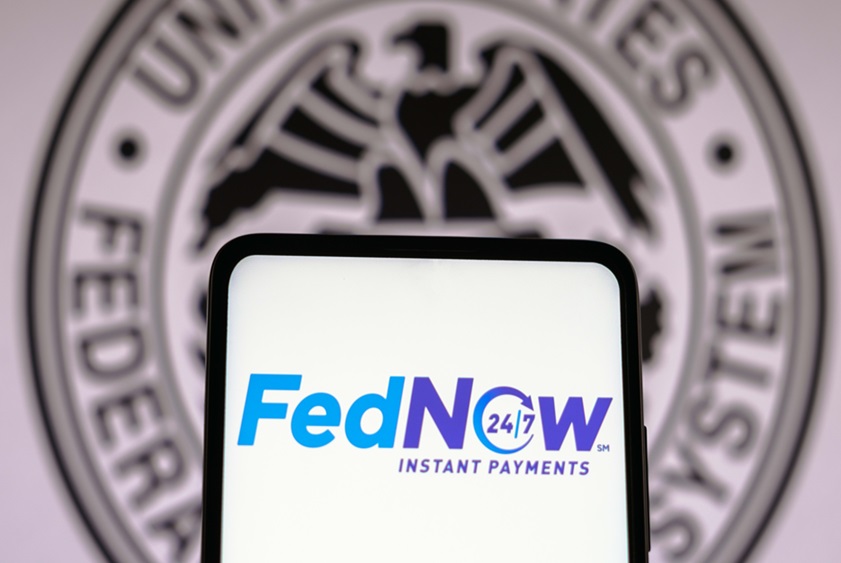
Amid the glare of red rockets and much other fanfare, the US finally announced the launch of FedNow on July 2023.
Can FedNow beat the Nordic success story
57 US banks (out of some 14,000 with licenses in the country) will be the first adopters of this instant payment service which will be rolled out in phases, eventually covering most if not all banks with Federal licenses as well as local players from individual states and regions.
While consumers have had access to apps like Venmo to send funds app to app, FedNow enables instant fund deposits into their bank accounts.
The US Federal Reserve claims that FedNow will supply increased convenience and speed for person-to-person payments, greater flexibility in payment methods for bills, rents and mortgages, universal inclusion of underserved populations, and a general opening of cash flow for consumers.
However, Justin Passalaqua, US Country Director for Worldline, cautions that launching a massive innovation like FedNow comes with challenges.
“Given the size of this launch and the complexity of current financial systems, the Federal Reserve may encounter issues such as integration compatibility with existing systems, varied willingness of consumers and businesses to adopt, hesitation to change or update current systems, and new fraud and security threats,” he says.
With research from JD Power indicating that one in three Americans experienced debit card fraud of some kind in 2022, Passalaqua’s concerns are well-placed.
Across instant payment schemes in Western Europe and Asia, the issue of liability transfer – whether a consumer, merchant or bank is liable for a fraudulent transaction – has never been adequately dealt with.
Miles Tullo, Managing Director of Banking and Payments from JD Power concurs, noting that, “As banks scale pay-by-bank solutions, security will significantly determine adoption rates and customer satisfaction.
The introduction of FedNow, and continued expansion of real-time payments from The Clearing House, have the potential to scale dramatically, creating a game-changer moment for banks – if consumers become comfortable with the security of that format.”
“One in three Americans experienced some kind of debit card fraud in 2022, cause for concern as instant payments come on stream.”
At a broader strategic level, it will be interesting to follow the development of FedNow in the next five to ten years.
We can expect FedNow to bring more partnerships between fintechs and banks to serve segments such as the growing army of “gig economy” workers who need to get paid quickly.
So far, fintechs have managed to build customer relationships but have lacked access to instant settlement. In that respect, the Fed’s announcement is, by itself, a game-changer.
At another level the concern must be that FedNow could fall prey to the same stagnation and complacency as Canada’s Interac system, which was a world first when launched some 20 years ago but now looks decidedly clunky and dated with low transaction limits and password-enabled transfers.
Of course, it’s equally possible that the American scheme could replicate the success of Norway’s VIPPS and Sweden’s SWISH, multiplying its functionality to include both peer-to-peer transactions, consumer payments, municipal account-to-account transfers and more.
Either way, the hope must be that the scheme stimulates competition and fuels innovation – but that’s only going to happen if the safety of instant payments can be adequately guaranteed.
And that may well require more regulation, something to which the US banking industry has proven notoriously resistant in the past.



Comments